Highest quality - Made in Germany
 Years of expertise since 1984
 Certified & Tested

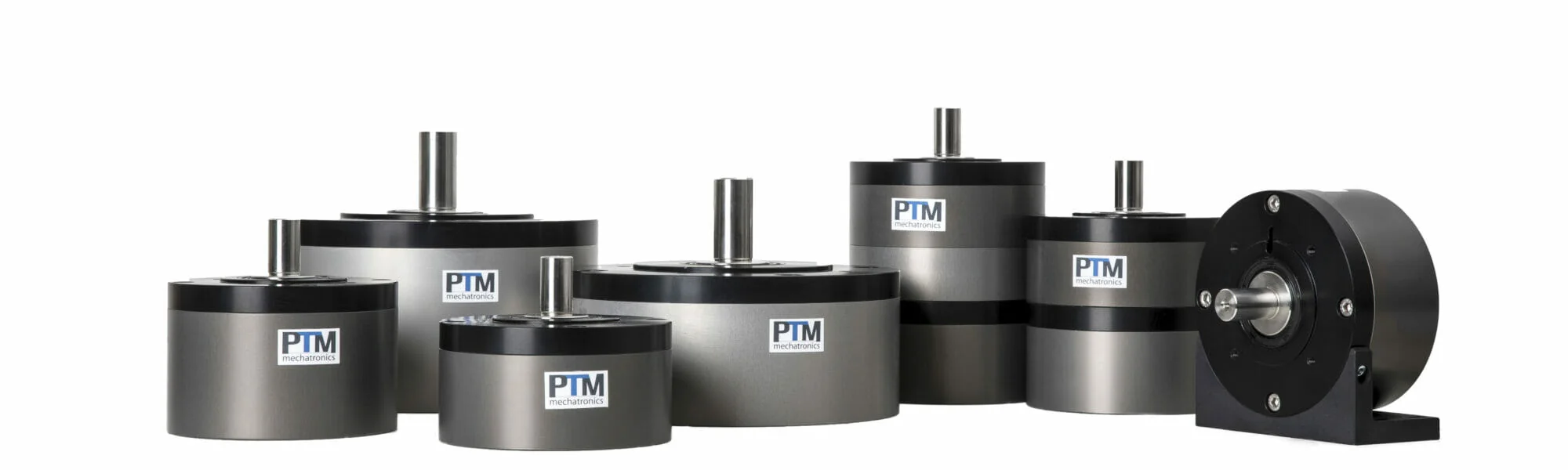
The radial piston motor
Powerful, economical, quiet - our Pneumatic motors work extremely efficiently and reliably, delivering high torque with minimal energy consumption, even under difficult conditions. Thanks to their sophisticated design, they are robust, low-maintenance and easy to clean. This equips them for use in potentially explosive atmospheres. ATEX-environment in which Food production, in Dreaming clean and pure and even under Water.
The radial piston principle leaves other technologies behind
 The radial piston principle is proven and established in hydraulics, for example as a drive for pumps. We have transferred this concept to pneumatics and built an air motor that is clearly superior to comparable drives, such as the vane motor.
Radial piston drive and the vane drive
Compared to the vane motor, our radial piston motor delivers higher torques with significantly reduced air consumption. It reduces energy costs by over 90 percent. The radial piston drive also has significant functional advantages. For example, it operates at full torque even at low speeds without an additional gearbox.
Advantages of the slat drive:
- over 90% lower air consumption
- higher torques
- Low speeds without gearbox
- Higher efficiency
- Compact design
Radial piston drive and the electric motor
The electric motor also has clear disadvantages compared to our radial piston motor. In many applications, the compressed air drive has obvious advantages due to its purely mechanical design. It defies heat, vibrations and shocks with ease. In overload applications, for example, it does not require any additional sensors or switches. In the event of an overload, the air motor moves to the stop due to its design and comes to a standstill without heating up the drive or causing any other damage. In special environments such as ATEX, with and under water or in dusty environments, in clean rooms or food areas, it can be used directly and without additional measures, unlike the electric motor.
Advantages over the electric motor:
- waterproof
- loadable up to the breastfeeding stage
- frequent load changes without any problems
- electromag etically interference-free
- Compact design
- lower weight and smaller dimensions
- ei-fold change of direction of rotation
- low heat development
- Higher efficiency
- High operational reliability
The radial piston principle
The radial piston motor is a mechanical drive that converts the pressure of an incoming gas or liquid into a rotary movement. It is particularly suitable for applications with high torques and low speeds. Originally used in hydraulics, the radial piston principle has also been used in pneumatics for many years.
 In radial piston motors, gas (pneumatics) or a liquid (hydraulics) flows centrally into the interior of the motor, where the pressure is transferred to moving pistons aligned in a star shape. The pistons are fitted with rollers and run on a cam machined into the inside of the housing. Depending on the position of the pistons, compression and expansion alternate. Where the curve describes a valley, the pistons have more space and allow the medium to flow in; on the uphill side, the piston is pushed back and the medium inside it is compressed. This causes the cylinder, in which the radial pistons are incorporated, to rotate. Only a minimum of compressed air is required.
As a purely pneumatic drive, the radial piston motor is generally suitable for use in ATEX zones, i.e. in potentially explosive environments. Some models, such as the ATEX motors from PTM mechatronics, are already ATEX-certified ex works.