Highest quality - Made in Germany
 Years of expertise since 1984
 Certified & Tested


What is a flow profile?
Agitators generate a targeted movement within the medium through their rotation. The individual components of the mix are guided through the container in a characteristic manner and move in specific flow patterns.
These flow patterns are significantly influenced by the design, size, number and arrangement of the agitators used. The resulting movement behavior of the medium is referred to as the flow profile.
In agitator technology, a basic distinction is made between three flow profiles: axial flow, radial flow and tangential flow.
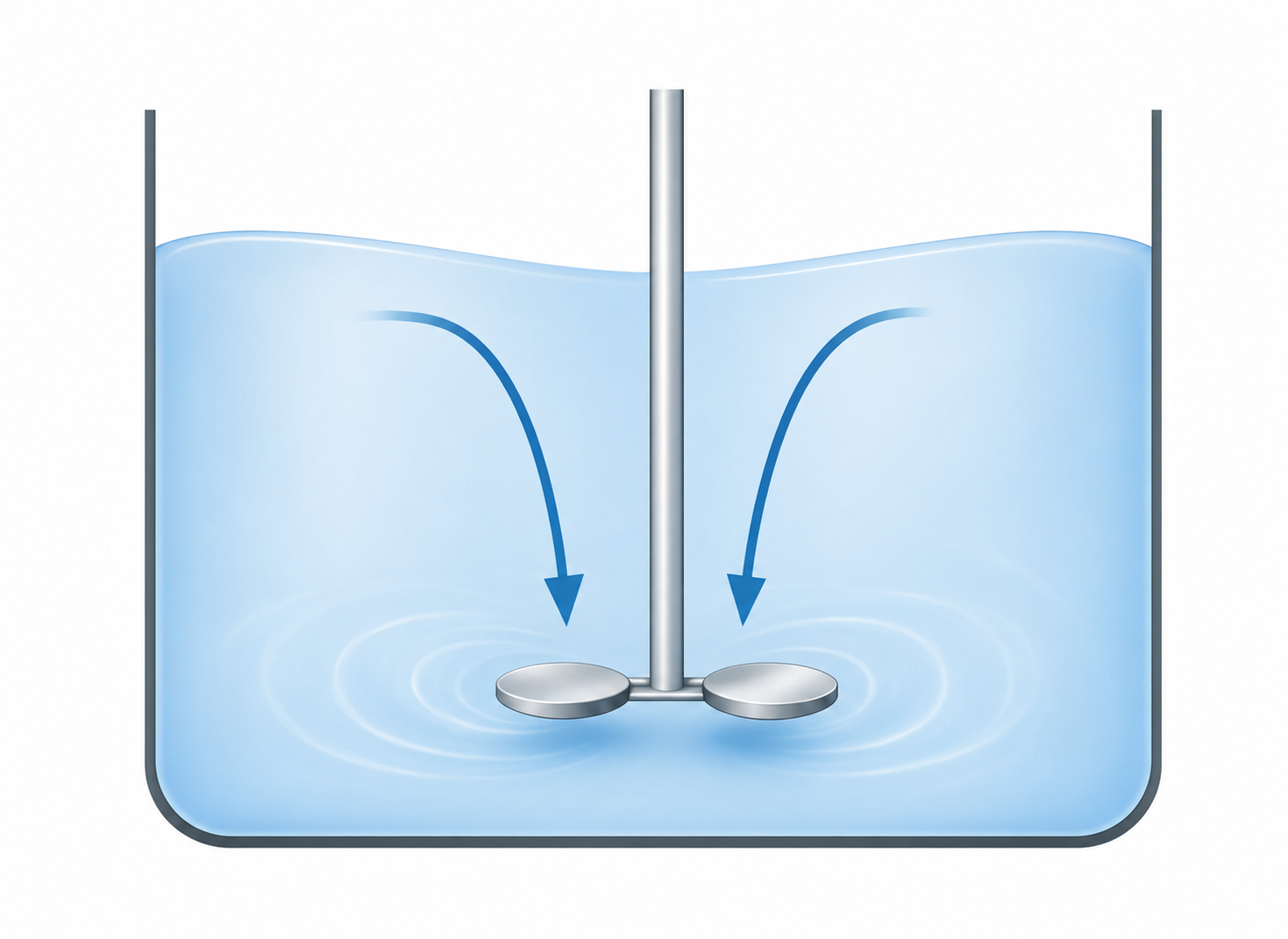
Axially conveying agitators
Axially conveying agitators generate a flow along the agitator shaft. The mix is first conveyed towards the bottom of the container. From there, it flows outwards to the container wall, rises along the wall and is then guided back to the surface and towards the agitator shaft and agitator element.
This creates a large-scale circulation movement within the container, which is particularly suitable for gentle and effective mixing.
Examples: Hollow body stirrers, propellers, inclined blade stirrers, spiral stirrers
Radial conveying agitators
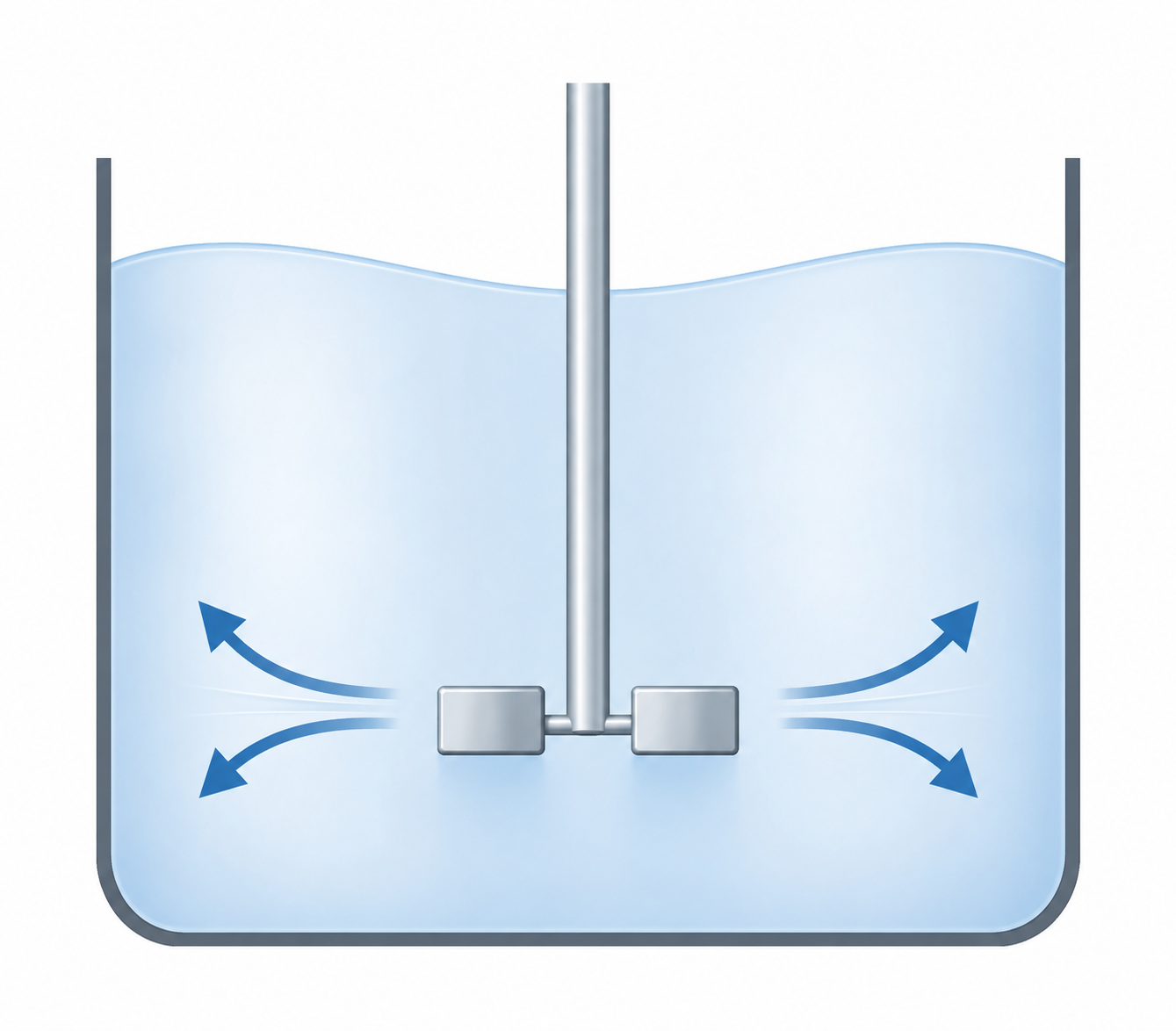
Radial agitators move the mix outwards from the axis of rotation towards the container wall. There, the flow splits and is deflected both upwards and downwards. The medium then flows back to the agitator shaft and the agitating element along the container base and surface.
This creates two opposing circulation flows within the tank.
Examples: Disc agitator, blade agitator, turbine agitator
Tangentially conveying agitators
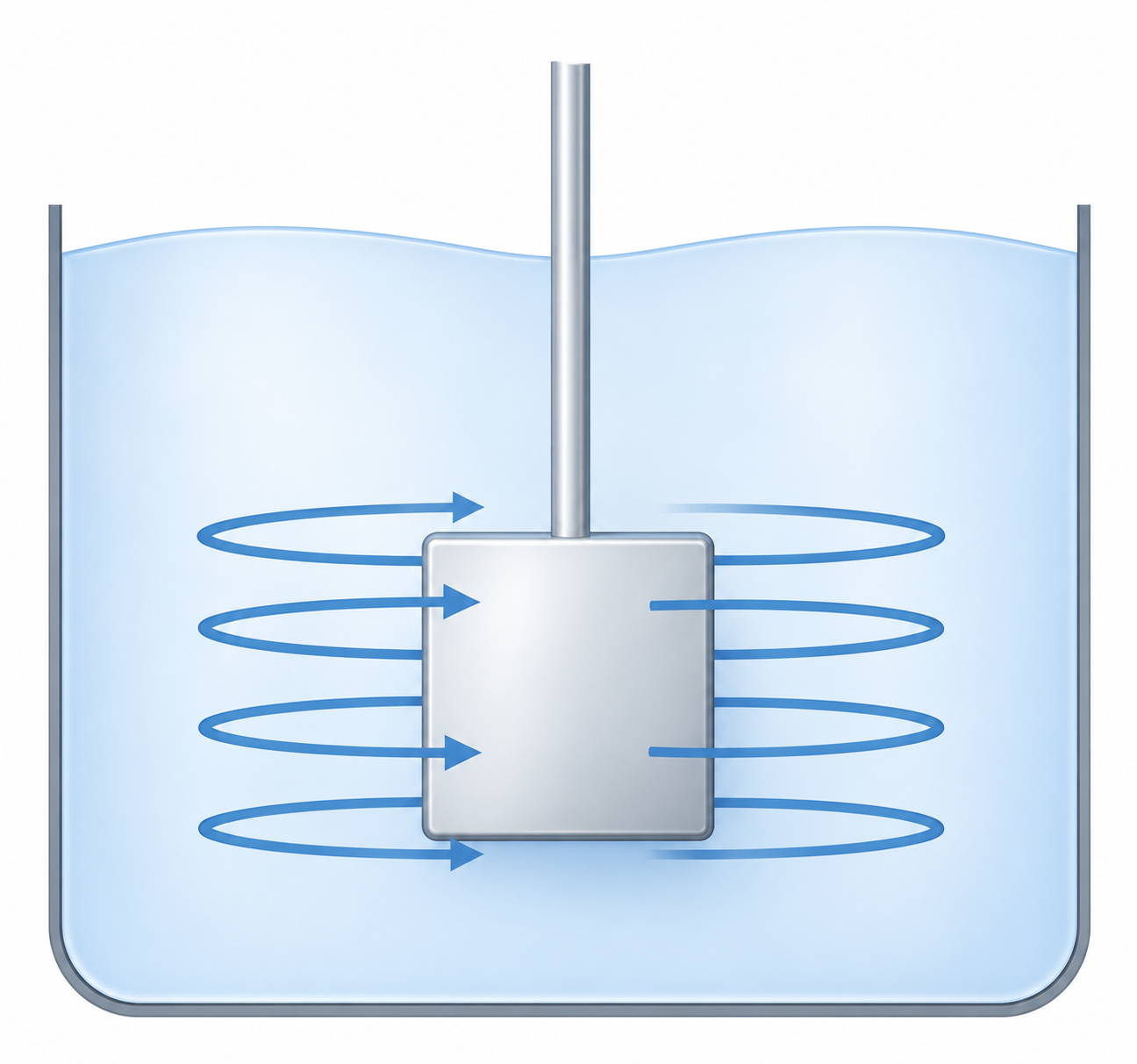
Tangentially conveying agitators generate a flow that moves the mix mainly in a circle around the agitator shaft. The medium mainly rotates on a horizontal plane around the agitator.
However, a purely tangential flow rarely occurs in practice. Even with axial or radial agitators, a tangential flow component always occurs.
Examples: Anchor stirrer, blade stirrer
In practice, agitators that combine axial and radial flow components are also used, such as cross-beam agitators.